SEA Marketing: Definition and How It Works
SEA marketing means buying ads on search engines to gain immediate visibility. Definition, how it works, and its difference from SEO.

SEA marketing covers advertising practices that consist of buying space on search engine results pages. A business selects keywords tied to its activity, sets a budget, and usually pays per click to appear above or alongside organic results. It is one of the two main acquisition levers on search engines, alongside organic search.
What is SEA in digital marketing?
SEA, short for Search Engine Advertising, means buying targeted ads on search engines to gain immediate visibility. It runs on three combined mechanisms: choosing keywords closely tied to the offer, a bid that sets the maximum price accepted per click, and targeting that filters by location, language, device, or time of day. Billing only kicks in once a user clicks the ad, which sets this model apart from traditional display advertising.
Unlike organic search work, which takes months to show results, an SEA campaign delivers results as soon as it is approved. That speed comes with a direct cost: visibility disappears the moment the daily budget is reached or the campaign is paused. SEA therefore fits particularly well with product launches, periods of heavy seasonal competition, or tests in new markets.
How an SEA campaign works: keywords, bids, and targeting
An SEA campaign starts with keyword selection, generally split into three families: brand terms, generic terms tied to the industry, and competitor terms. Each keyword can be assigned a match type, more or less broad, which determines which search variants trigger the ad.
The bid sets the maximum amount an advertiser accepts to pay per click on that keyword. It is not the only ranking factor, though: Google and other ad networks compute a quality score that evaluates the ad’s relevance, the expected click-through rate, and the experience delivered on the landing page. A high quality score can secure a better position for a lower cost per click than a less relevant competitor willing to bid higher.
Targeting then refines the delivery: geographic area, language, device type, time slot, or an audience defined by interest. Building a clear marketing persona beforehand makes this setup easier, since targeting criteria should flow directly from the profile of the buyers targeted rather than from general assumptions.
SEA and SEO: what are the differences and how do they complement each other?
SEO and SEA pursue the same goal, appearing on results pages, but follow opposite logics in terms of timing, cost, and durability. The table below sums up the main gaps between the two levers.
| Criterion | SEO | SEA |
|---|---|---|
| Time to results | Several months | Immediate |
| Cost model | Investment in content and technical work | Pay per click |
| Duration of visibility | As long as the content stays relevant | As long as the budget is active |
| Control over the message | Limited by algorithms | Full control over ad copy |
| Brand searches | Usually captured for free | Require a bid |
These differences do not make the two levers competitors, but complements. SEA offsets the slowness of organic search on strategic or seasonal keywords, while SEO reduces reliance on ad budget once content is durably ranked.
The main platforms for running SEA
Google Ads remains the leading platform for SEA in France, driven by Google’s market share on search. The platform covers the search network, but also Display and Shopping, through a shared bidding system.
Microsoft Advertising runs the same types of campaigns on Bing, with lower search volumes but often weaker competition, and therefore a generally lower cost per click. Some social networks offer advertising formats triggered by an internal search, but they fall under social ads logic rather than SEA in the strict sense, since targeting there relies more on the user’s profile than on an expressed search intent.
How to set up an effective SEA strategy
The first step is translating a business objective (sales, leads, downloads) into measurable indicators before choosing a single keyword. This clarification avoids calibrating a campaign around a traffic volume that never turns into a concrete result.
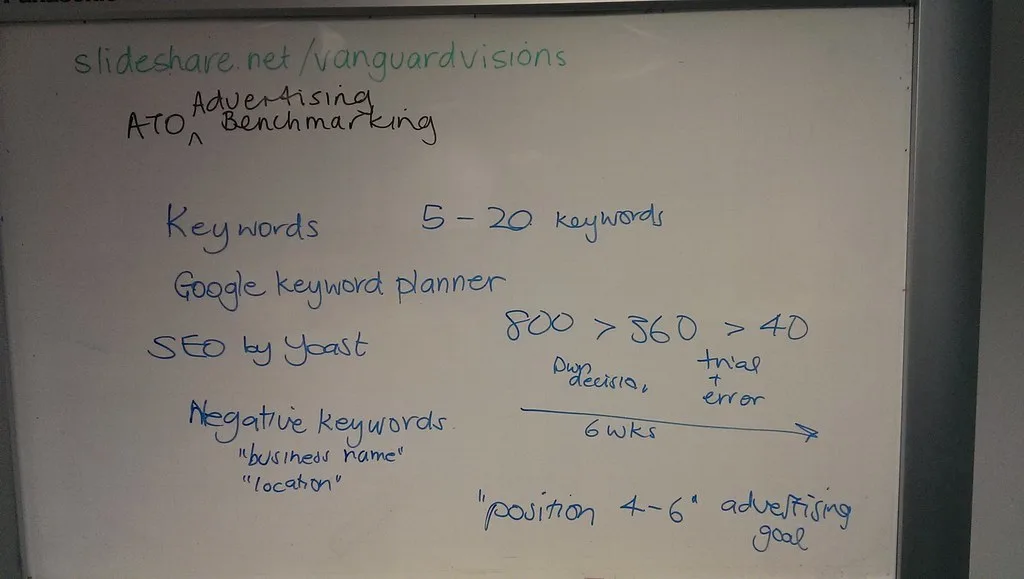
Next comes keyword research, ruling out irrelevant terms from the start through negative keywords. An ad should mirror the exact wording of the search to maximize perceived relevance, a criterion that directly affects the quality score and therefore the final cost per click.
The landing page deserves as much attention as the ad itself: a relevant ad message that leads to a generic page hurts both the conversion rate and the quality score. Properly configured conversion tracking then makes it possible to adjust bids on the keywords that actually deliver results, rather than the ones that only generate volume.
Structuring the account into coherent ad groups, gathering semantically close keywords with ads that mirror that vocabulary, also improves the clarity of tracking. A group that is too broad mixes different search intents and makes it hard to identify which keyword is actually responsible for a given performance, good or bad. Testing several versions of the same ad, varying the headline or the hook, then makes it possible to keep the wording that gets the best click-through rate without starting from scratch each time.
Which metrics to track to measure SEA performance
Cost per click measures what each visit costs, but says nothing about its value: an expensive click on a highly qualified keyword can still be more profitable than a cheap click that never converts. Click-through rate shows how relevant the ad is to the search, while conversion rate measures what happens once the user lands on the site.
Cost per acquisition and return on ad spend remain the indicators that come closest to the original business objective, since they factor in the value generated and not just the traffic obtained. Tracking these metrics over time also helps spot account settings that quietly waste budget, a topic covered in our article on tools to save money on Google Ads.
Comparing these indicators from one period to the next is more useful than reading them in isolation: a rise in cost per click matched by an equivalent rise in conversion rate does not necessarily hurt the campaign’s profitability. Conversely, a stable click volume paired with a rising cost per acquisition usually signals a relevance problem between the ad, the keyword, and the landing page, one that should be fixed before increasing the budget.
Frequently asked questions
What is SEA in digital marketing?
SEA, short for Search Engine Advertising, refers to buying ad space on search engines such as Google or Bing. Advertisers choose keywords tied to their business and generally pay per click, through a bidding system. Unlike organic search, the visibility it delivers is immediate but stops as soon as the budget runs out.
What is the difference between SEO and SEA?
SEO targets organic rankings built over time through a site’s content and technical quality, with no direct payment per click. SEA relies on paid bidding that guarantees a visible spot as long as the budget keeps flowing. Both levers often target the same searches but follow opposite logics of timing and cost.
Can SEA work without any SEO effort in parallel?
Technically yes, an SEA campaign can run on its own and generate traffic as soon as it goes live. In practice, having no SEO foundation means paying continuously for all of the visibility, including on brand searches that organic search would otherwise capture for free. Most advertisers combine both to spread the budget risk.
What does an SEA strategy consist of?
An SEA strategy starts from precise business objectives, translated into keywords, bids, and targeting criteria such as location, demographics, or time of day. It includes writing the ads, choosing the landing pages, and tracking conversions to adjust bids. Continuously improving the quality score then makes it possible to lower the cost per click without losing visibility.
Which platforms can be used for SEA?
Google Ads remains the leading platform for SEA in France, followed by Microsoft Advertising, which runs on Bing. Some social platforms offer similar search-triggered ad formats, but they fall under social ads rather than SEA in the strict sense.